
On July 30, 2026
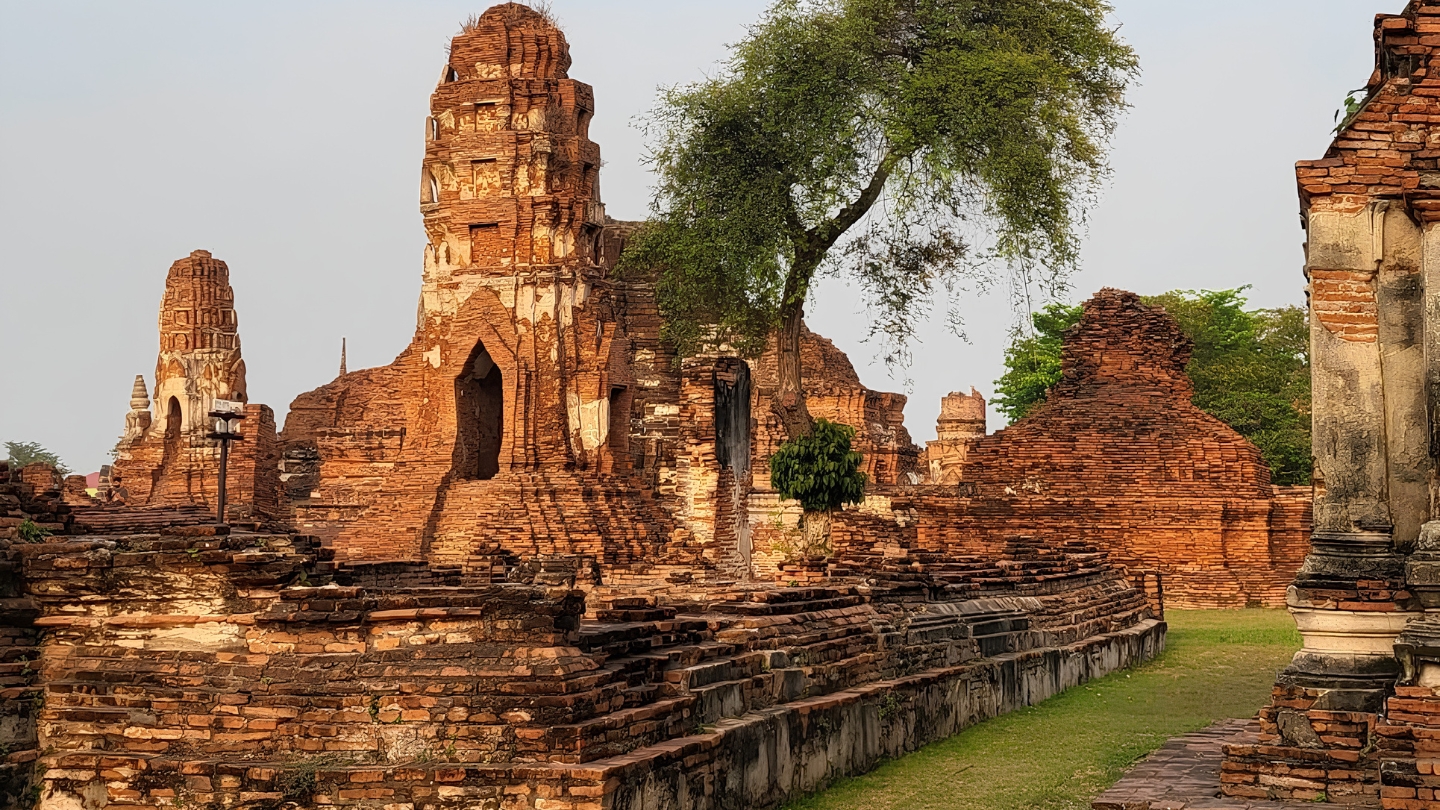
Wat Mahathat proudly stands as the undisputed spiritual and administrative epicenter of the ancient Sukhothai Kingdom, representing a golden era of Thai history, art, and religious devotion. To wander through its expansive, beautifully preserved ruins today is to step back into a time when devotion shaped the very earth and stone of the landscape. The compound is a masterclass in ancient urban planning and theological architecture, designed not merely as a place of worship, but as a physical manifestation of Buddhist cosmology. It is a sprawling, awe-inspiring complex that commands attention and reverence, capturing the imagination of all who walk its sacred grounds.
The Historical Evolution of the Great Relic Temple
The foundation of Wat Mahathat is deeply intertwined with the dawn of the Sukhothai period itself. The central chedi, the most sacred and prominent structure within the sprawling complex, was originally founded by Si Inthrathit, the first king of Sukhothai, who reigned from 1240 to 1270. Under his visionary leadership, the temple began to take its initial form, serving as the nascent kingdom’s spiritual anchor. However, the monument as it is largely understood today owes much of its grandeur to King Loethai, who reigned from 1298 to 1346. In the 1330s, King Loethai undertook a massive and ambitious rebuilding project to significantly expand the central chedi. His primary motivation for this grand architectural endeavor was to house holy relics of the Buddha, elevating the temple’s status to a premier pilgrimage site and solidifying the kingdom’s divine mandate.
Following King Loethai’s monumental contributions, the temple complex did not remain static. Buildings, shrines, and monuments were continuously added to the sacred precinct by successive kings, each eager to leave their own mark of piety and accumulate spiritual merit. This generational commitment to the site resulted in a magnificent, densely packed architectural wonderland. By the time the mighty Sukhothai Kingdom eventually fell into decline and the temple was heartbreakingly abandoned in the 16th century, Wat Mahathat had grown to an astonishing scale. At the height of its glory, the complex boasted some 200 individual chedis, alongside numerous vihans (assembly halls for the laity) and mondops (square, enclosed shrine structures), creating a breathtaking skyline of spires and intricately carved roofs.
Star Features of the Central Complex
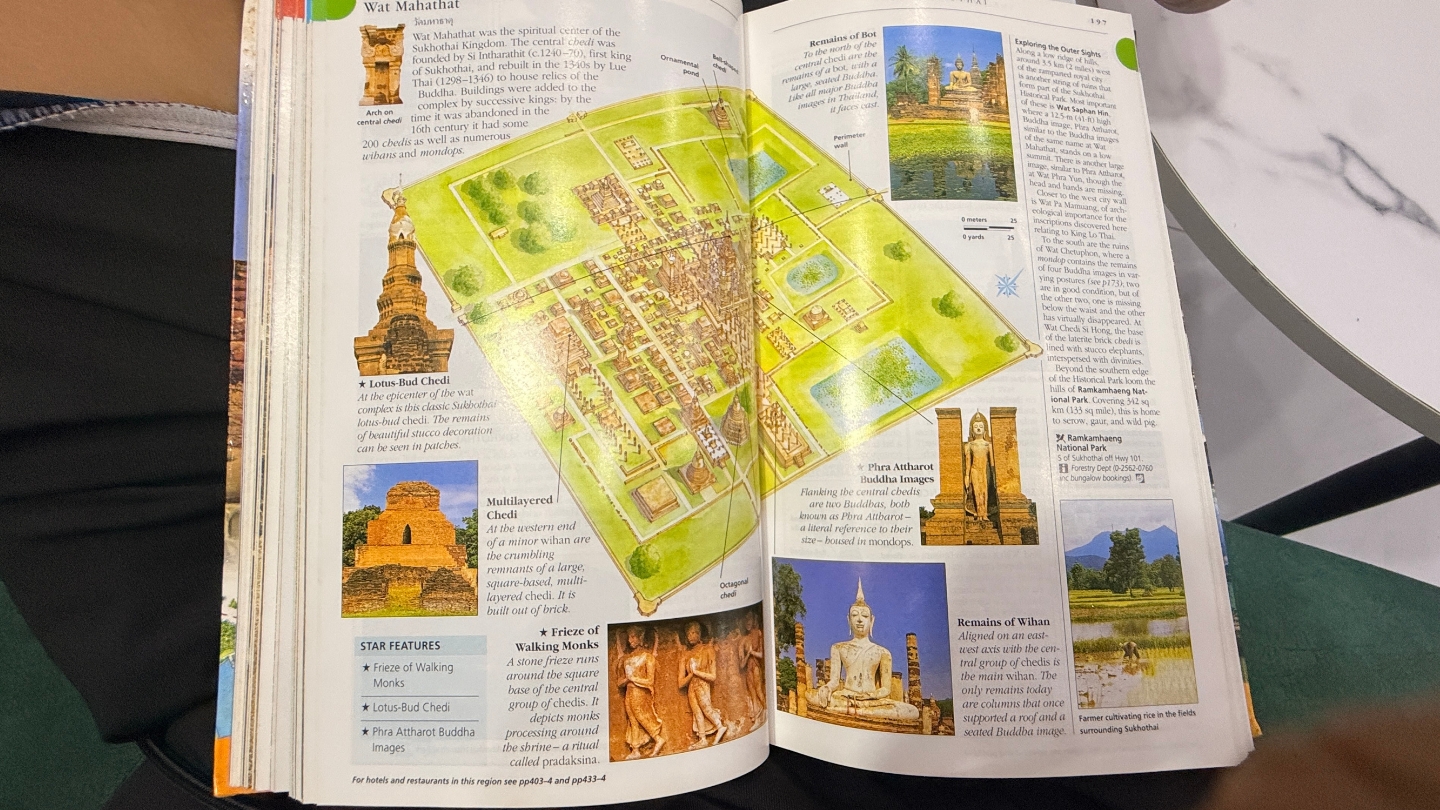
The immense scale of Wat Mahathat can be overwhelming, but several “Star Features” stand out as unparalleled examples of Sukhothai craftsmanship and religious artistry. These elements represent the pinnacle of the kingdom’s artistic achievements.
|
Feature |
Description |
Significance |
|
Lotus-Bud Chedi |
The central spire of the complex. |
Classic Sukhothai architectural innovation. |
|
Frieze of Walking Monks |
Stone carving around the main base. |
Depicts the living ritual of pradaksina. |
|
Phra Attharot |
Colossal standing Buddha images. |
Demonstrates immense scale and devotion. |
The Epicenter: The Lotus-Bud Chedi
At the absolute epicenter of the wat complex rises the spectacular central chedi, built in the classic Sukhothai lotus-bud style. This unique architectural motif—a spire culminating in the graceful, tapering form of an unopened lotus flower—is the defining characteristic of Sukhothai art, symbolizing purity, spiritual awakening, and the journey toward enlightenment. The central chedi is not merely a tower; it is a profound theological statement rendered in brick and stucco. Though centuries of weathering and abandonment have taken their toll, the crumbling remnants of beautiful, intricate stucco decoration can still be seen in delicate patches clinging to the brickwork, offering a tantalizing glimpse into the vibrant, ornate beauty that once covered the entire structure. An impressive arch is also a notable feature located on this central chedi, adding to its complex geometric profile.
Monastic Life in Stone: The Frieze of Walking Monks
Surrounding the square base of this magnificent central group of chedis is a feature that breathes life into the cold stone: a beautifully detailed stone frieze. This continuous carved band depicts a procession of walking monks, their robes flowing and their hands clasped in reverence. They are shown engaging in a deeply sacred ritual processing around the shrine, a circumambulatory practice known as pradaksina. This ritual, where devotees walk clockwise around a sacred object to show respect and absorb its spiritual aura, was a cornerstone of daily worship. The frieze captures this dynamic, moving devotion, freezing a moment of ancient faith in time for modern visitors to witness.
Colossal Devotion: The Phra Attharot Buddha Images
Flanking the central chedis and standing as silent, imposing guardians of the sacred relics are two colossal Buddha images, both widely known as Phra Attharot. This name is not merely a title; it is a literal reference to their awe-inspiring, towering size. These monumental figures were once securely housed within towering mondops, square structures designed specifically to enclose and protect such massive sacred objects. Though the roofs of these mondops have long since vanished, leaving the Buddhas exposed to the vast Thai sky, their sheer scale continues to dominate the landscape, instilling a sense of profound humility in anyone who stands before them.
Supporting Structures: Assembly Halls and Minor Shrines
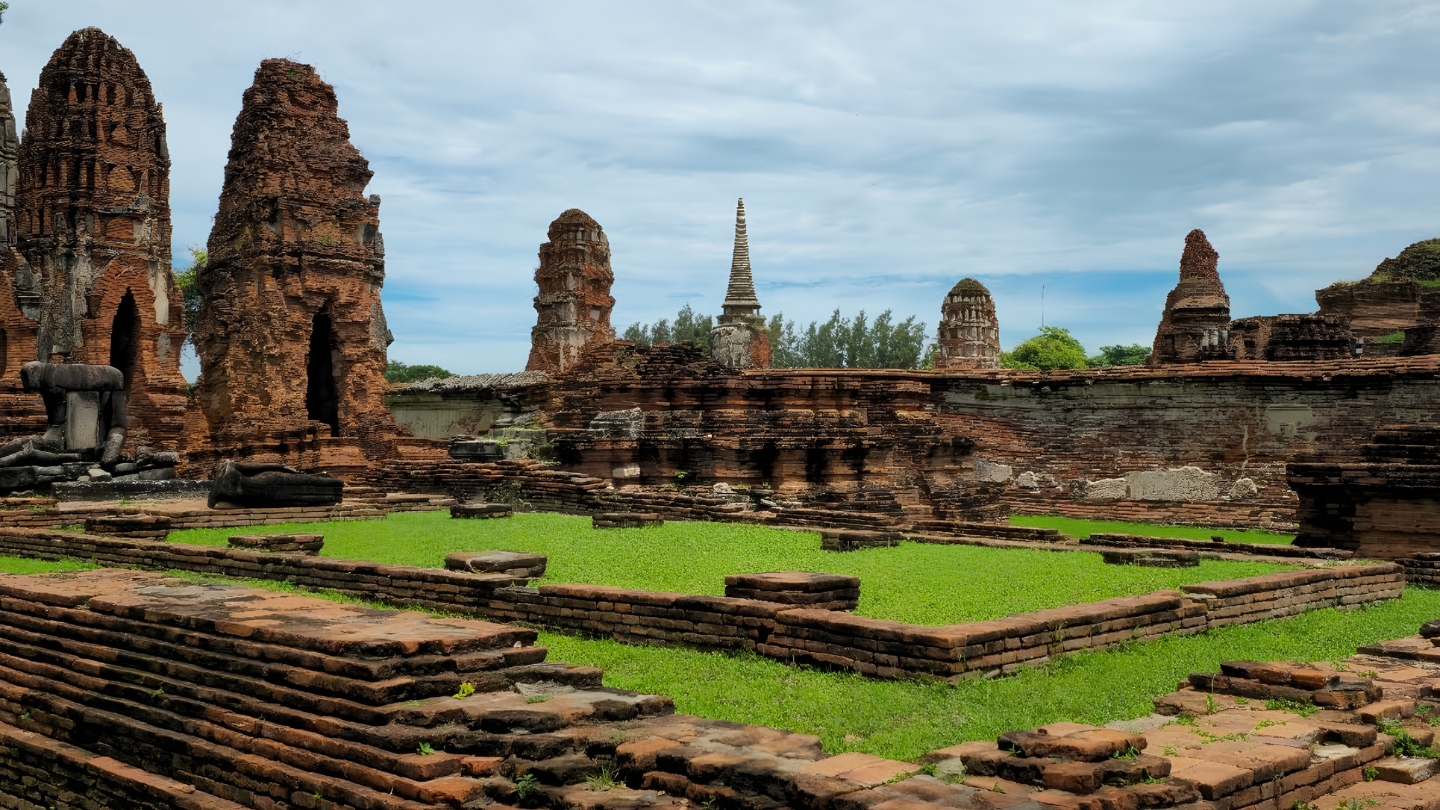
Beyond the immediate central cluster, Wat Mahathat is defined by a highly structured and purposeful layout, featuring specific buildings designed to facilitate the complex operations of a thriving state temple.
The Remains of the Vihan and the Bot
Aligned precisely on a strict east-west axis with the central group of chedis is the main vihan, the primary hall for sermons and gatherings. The passage of time has been harsh to this once-great wooden-roofed structure. The only remains visible today are the sturdy stone columns that once reached high to support a massive, ornate roof, and the serene remnants of a large seated Buddha image at the rear, which would have gazed out over the assembled congregation.
To the north of the central chedi lie the remains of the bot. In Thai temple architecture, the bot (or ubosot) is the most sacred assembly hall, specifically demarcated for the ordination of monks and vital monastic rituals. This was once a exceptionally large, walled assembly hall. Staying true to a fundamental tenet of Buddhist spatial arrangement, this bot—like all major Buddha images and their primary enclosures in Thailand bike tours—faces directly east, greeting the rising sun, which symbolizes the Buddha’s attainment of enlightenment at the break of dawn.
Multilayered and Octagonal Chedis
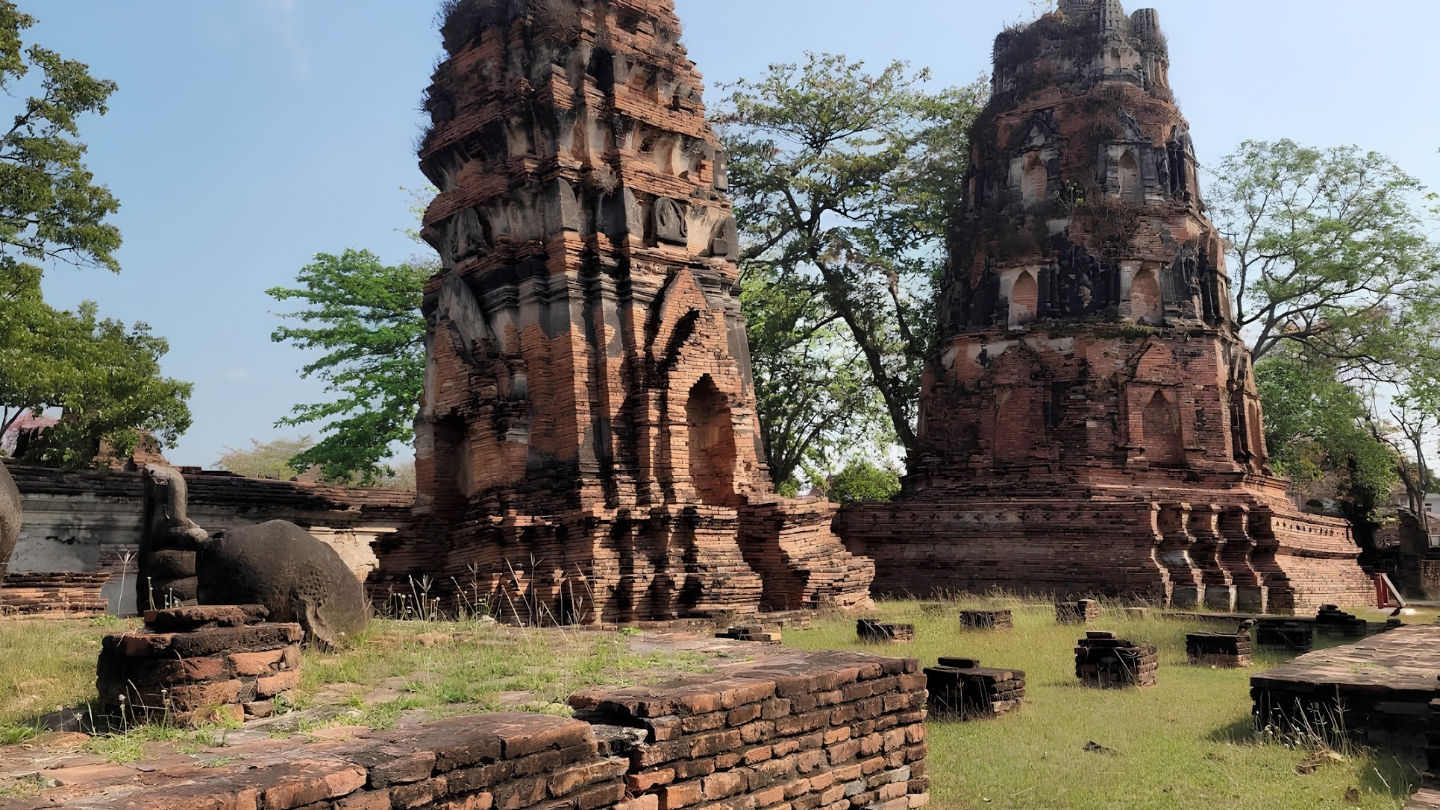
The sheer volume of the 200 chedis mentioned earlier means there is immense architectural variety within the compound’s perimeter wall. For instance, at the far western end of a minor vihan, visitors can find the crumbling, melancholic remnants of a large, square-based, multilayered chedi. Built solidly out of regional brick, its tiered structure represents the various levels of the Buddhist heavens. Nearby, navigating by the intricate map of the grounds, one might also spot the distinct geometric form of an octagonal chedi, contrasting beautifully with the more common square or bell-shaped bases, and highlighting the experimental and diverse nature of Sukhothai builders.
To complement the imposing stone and brick structures, the grounds were designed to incorporate elements of serene nature. An ornamental pond was carefully integrated into the complex’s layout, providing not only a vital water source for the monks but also a tranquil, reflective surface that would have mirrored the towering spires above, enhancing the site’s atmosphere of deep meditation and peace.
Practical Note: For travelers exploring this vast region, comprehensive information regarding local accommodations and dining options can be found in specialized regional guides. For hotels and restaurants in this specific region, see pp403-4 and pp433-4 of your complete touring directory.
Exploring the Outer Sights: Beyond the Main Walls
The grandeur of the Sukhothai Kingdom could never be contained within the perimeter wall of a single temple, no matter how vast. Along the edge of tranquil lakes and just outside the main ruins of the compound wall lie significantly more ruins, collectively forming the majestic Sukhothai Historical Park. Navigating this expansive park—often charted on maps with a trusty compass rose pointing North and a scale clearly marking 0 meters to 25, and 0 yards to 25—reveals a wider landscape of devotion.
Wat Saphan Hin and Wat Phra Phai Luang
One of the most important of these outer monuments is Wat Saphan Hin, located prominently on a hill overlooking the plains. Its absolute main feature is an imposing 12.5-meter (41-foot) high standing Buddha image. This magnificent statue is strikingly similar to the Phra Attharot of the same name found at the central Wat Mahathat. It stands proudly on a low square base, projecting an aura of protective grace over the valley below. Furthermore, inside its primary structure, there is another large image waiting to be discovered by dedicated explorers.
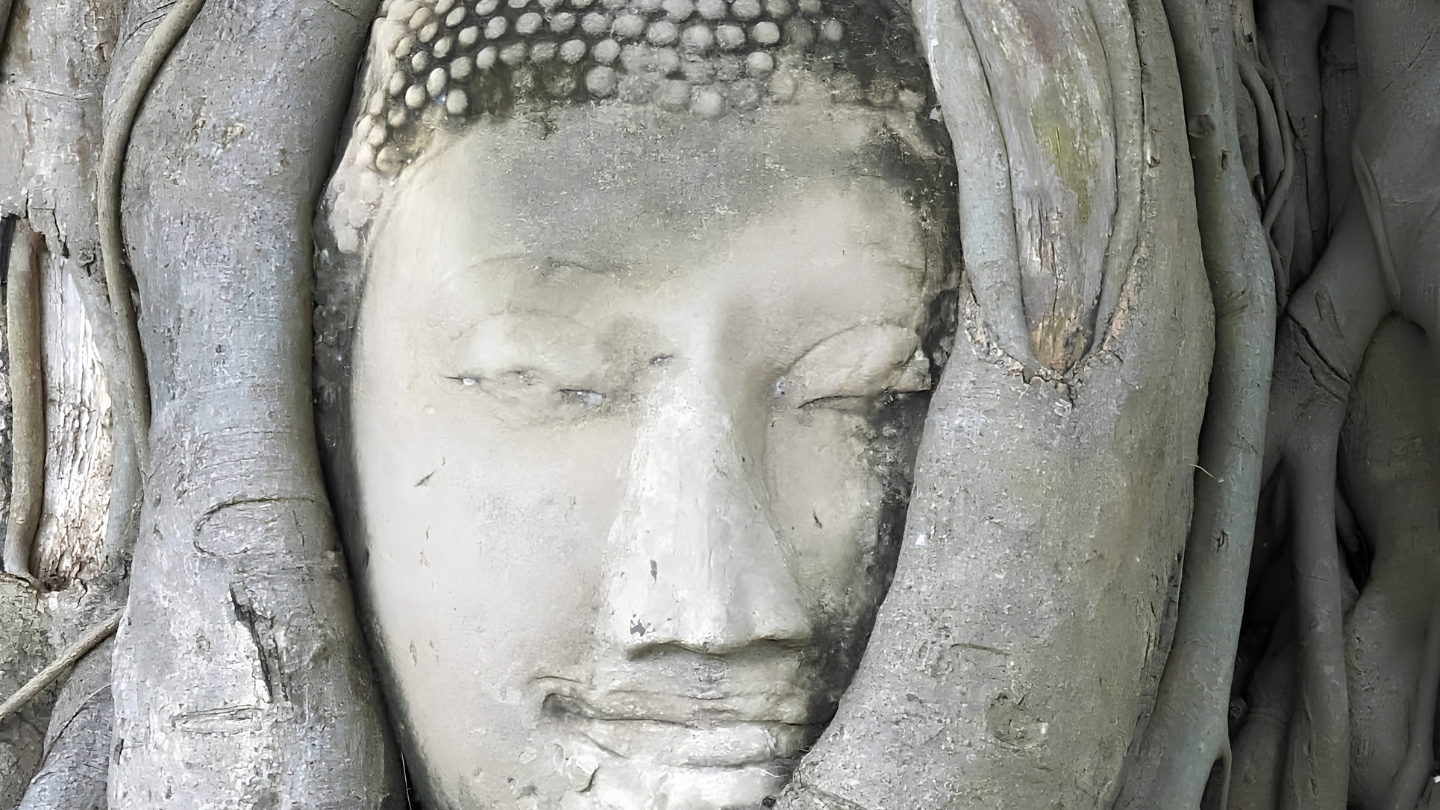
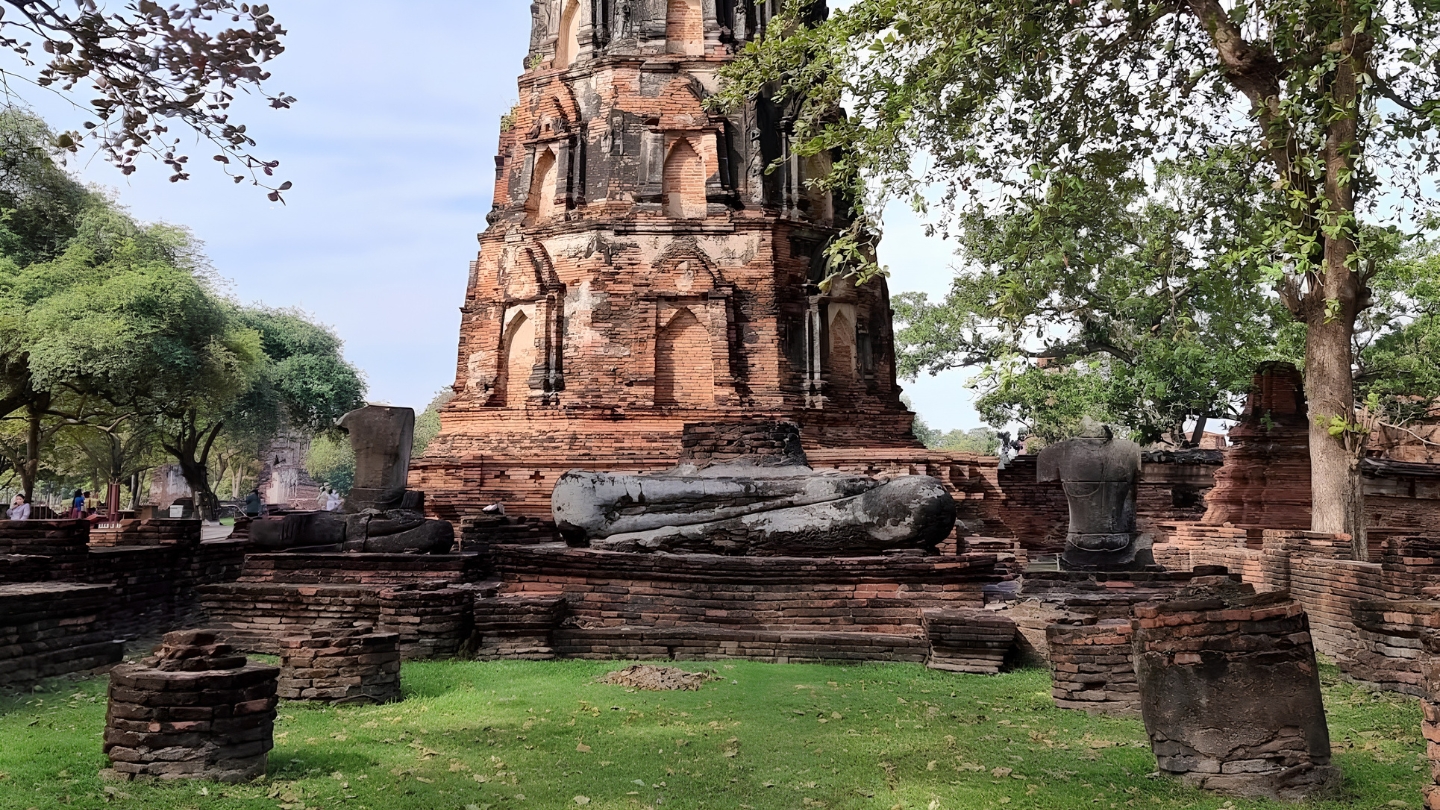
Directly west through the landscape, toward the west city wall, lies Wat Phra Phai Luang. This site is of immense historical significance because it is an important, older Khmer site that actually predates the official founding of the Sukhothai kingdom. Exploring its ruins offers a fascinating architectural contrast, showing the transition from the heavier, ornate Khmer style to the more graceful, tapering lines that would eventually characterize classic Sukhothai art. Sadly, like many ancient sites, time and the elements have taken their toll; on some of its prominent statues, the head and hands are tragically missing.
Wat Chetuphon and Wat Chedi Si Hong
Venturing to the south of the main city walls reveals the evocative ruins of Wat Chetuphon. Here, a beautifully moated mondop houses the remarkable remains of four Buddha images, uniquely carved to represent the Buddha in four varying, classical postures: sitting, standing, walking, and reclining (for further details on posture iconography, see p273 of the historical index). While two of these magnificent images are still in relatively good condition, allowing visitors to appreciate the craftsmanship, the other two have suffered greatly; one is completely missing below the waist, and the other has virtually disappeared entirely, leaving only a haunting silhouette of what once was.
Also in the southern sector is Wat Chedi Si Hong, which boasts a highly distinctive decorative element. The base of this temple’s laterite brick chedi is elaborately lined with a frieze of sculpted stucco elephants. These noble beasts, deeply revered in Thai culture as symbols of strength and royal power, are beautifully interspersed with intricate carvings of heavenly divinities, creating a lively and visually arresting foundation for the stupa above.
The Natural Frontier: Ramkhamhaeng National Park
Beyond the southern edge of the curated Historical Park, the neatly trimmed lawns and ancient brickwork give way to a much wilder, untamed landscape. Looming large on the horizon are the rugged, densely forested hills of Ramkhamhaeng National Park. Covering an expansive 342 square kilometers (132 square miles), this vital protected area serves as a stark, vibrant contrast to the silent ruins of the ancient city.
The national park is a thriving, breathing ecosystem and is home to a diverse array of impressive wildlife, including the elusive serow (a goat-antelope species), the massive and powerful gaur (wild ox), and the rugged wild pig. For adventurous travelers looking to step away from the historical ruins and immerse themselves in cycling Thailand, the park offers an incredible escape into the wild mountains that once formed the natural defensive borders of the ancient kingdom.
Ramkhamhaeng National Park Visitor Information:
-
Location: Situated to the South (S) of Sukhothai, easily accessible off Highway 101.
-
Contact: For trail conditions and entry details, contact the Forestry Department at 0-2562-0760.
Finally, while exploring this incredible intersection of ancient history and natural wonder, one is constantly reminded of the enduring spirit of the land. Just as they have done for centuries, long before the first bricks of Wat Mahathat were ever laid, the local people remain deeply connected to the earth. A common and timeless sight of our cycling tour in Thailand is the image of a local farmer cultivating rice in the lush, verdant fields surrounding Sukhothai, continuing an agricultural legacy that once fed a glorious empire and continues to sustain the nation today.
Trending Posts


Follow Us On Facebook
<!– –>